




Kutayib
Preface
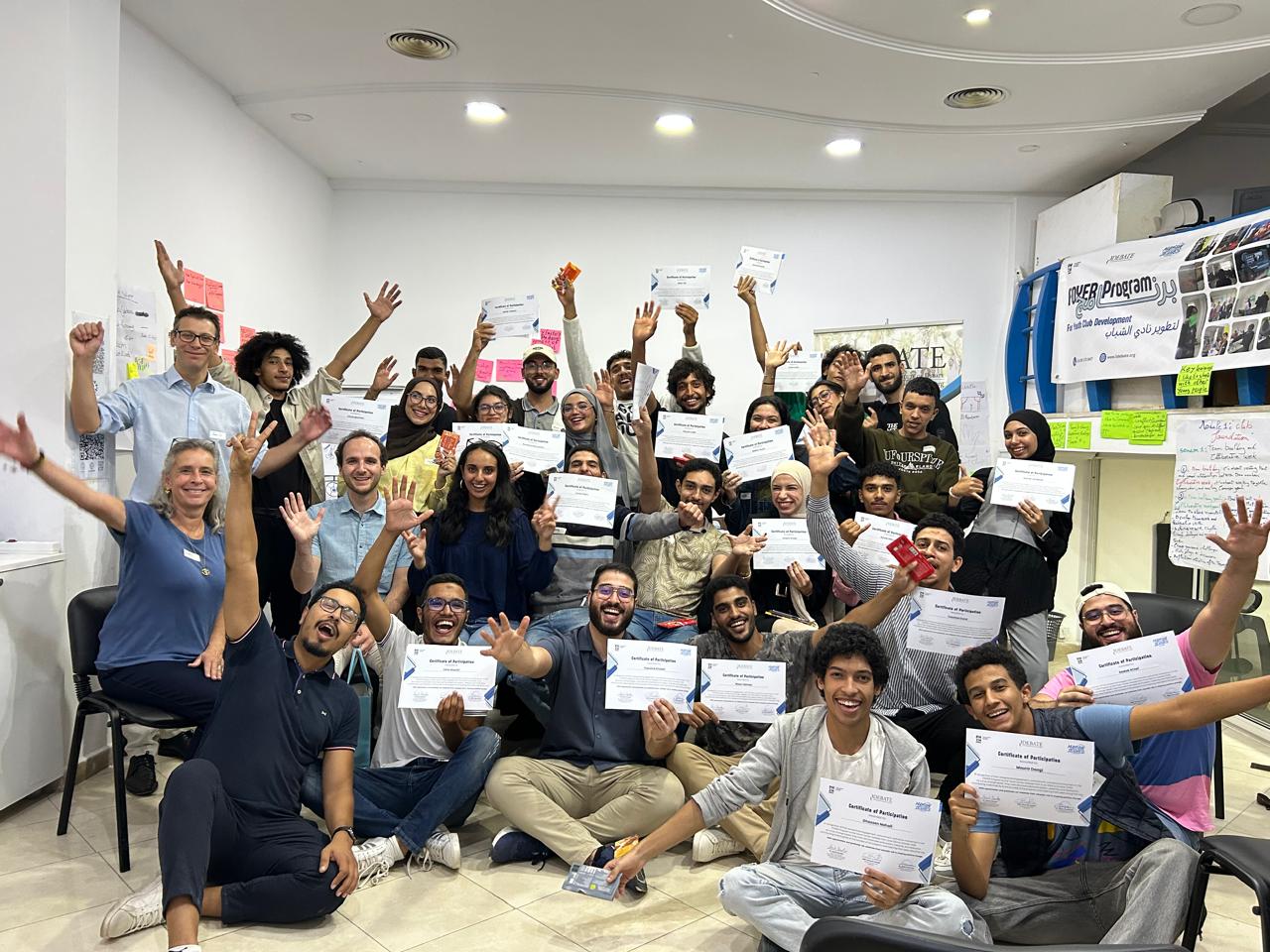
Youth is a formative period — whether in Tunisia, Switzerland, or anywhere else in the world. It is a biographical phase marked by exploration, uncertainty, and the search for identity and belonging. Young people (re)shape their understanding of themselves during these years. They search for their place in society, explore their personal and professional abilities as well as their capacities to influence the world around them. In times of social, political and economic challenges, young people are usually particularly affected and should be empowered.
The project “Fostering Self-Competences in Tunisian Youth Centers” (FOYER) was born from the conviction that empowering youth means more than preparing them for the labor market. FOYER aimed at nurturing resilience, self-awareness, and social competence. These abilities are crucial for their personal growth as well as their professional pathway. Youth centers, as spaces of encounter and growth, play a crucial role in this process. They offer young people a safe environment in which to express themselves, to learn together, and to establish long lasting friendships. These centers provide not only non-formal education but also the vital experience of community and belonging. And community and belonging are essential elements in strengthening self-confidence and social cohesion.
This manual called Kutayib, presents the educational materials and approaches developed within the FOYER project. It is the result of a close collaboration between the director and the youth of the Jedaida Youth Center in Manouba, educational experts from the NGO iiDebate and from the Zurich University of Teacher Education. The Jedaida Youth Center has served as the project’s pilot institution. The sessions outlines in the Kutayib here aim to enhance the capacity of youth workers and club leaders to promote self- and social competences among young people beyond Jedaida.
Realizing the FOYER-project, would have not been possible without the great commitment from Mme. Khaoula Ebdelli, the director of the Jedaida Youth Center. Her energy and heartful admiration for the young people in Jedaida are true sources of inspiration for us and we want to thank her sincerely for all her support.
A big thank you goes to all the young people of Jedaida who participated in the FOYERworkshops, namely to Sadok Khalef, Yassine Khalef, Yasmine Jlassi, Kenza Gheriani, Ghassen Nahali, Louay Riahi, Balkis Touzri, Omnia Jendoubi, Nizar Hamza, Maha Khezami, Mounir Daagi, Ghayth Mliki, Louay Arafa, Nour Aouini, Yassine Aouini, Rayen Korbi, Mohamed Rajhi, Dhia Aouini, Mariem Dridi, Nadhem Sahlia, Ahlem Smeti, Mohamed Aouidet, Ahmed Marzouki, Nour Ksontini, Sabri Tlili, Zineddine Abidi, Oumayma Benyounes, Ameni Benyounes, Abdelkodous Aouidet, Amir Trabelsi, Ayoub Mzoughi, Aziz Doufeni, Hamouda Sassi and Yomna Trabelsi. They contributed to FOYER and continuously tested the materials of the Kutayib with great enthusiasm, joy and motivation.
We also would like to thank our students, Julie Haller, Laura Bächer, Laura Kockelkorn, Luca Huder, Michelle Knöpfli and Nicole Wetli, for contributing to the FOYER-workshop in April 2025 at the Zurich University of Teacher Education. Moreover, we thank Laura Kockelkorn, Nicole Wetli and Luca Huder for additionally contributing to the project by revising the Kutayib and/or contributing in workshop sessions.
The FOYER-project would have not been possible without relentless engagement by our colleagues of iiDebate. We warmly thank Elyes Guermazi and Mohamed Ouahebi for their important contributions and coordination in the FOYER-project, Samar Jandoubi for her dedicated contributions to the workshop sessions and to the Kutayib, and Mariem Oueslati for editing and the graphic design of Kutayib.
We are also indebted to Nada Najjar from the Department of Psychology of the University of Tunis and Wiltrud Weidinger from the Department International Projects in Education of the Zurich University of Teacher Education for accompanying FOYER with research. The findings of this research reaffirm the significance of FOYER and serve as a strong motivation to continue working in this spirit.
We also want to express our sincere thanks to our dear colleagues from the Zurich University of Teacher Education, who contributed with their experience and expertise to FOYER: To Manuel Zolliker for exploring the possibilities to combine music and life skills, to Thomas Staub for introducing the youth of Jedaida and us to the creative possibilities of making and to Peter Holzwarth for his input in critical media work – a crucial topic particularly for young people.
We are very grateful to the Leading House MENA for financial support. Without the funding through their Consolidation Grant, we would not have been able to realize FOYER.
Finally, I also want to warmly thank my dear colleague Doris Kuhn from the Department International Project in Education of our university. She has contributed to FOYER on all levels and with great dedication since the start of the project.
We hope the Kutayib will serve as both a practical guide and an inspiration for all who work with and for young people in Tunisia and beyond, helping to create youth centers that are true foyers — places of warmth, growth, and community.
Tunis / Zurich, November 2025,
Samir Boulos